Dysphagia and IDDSI Training: What It Means for Families We Support
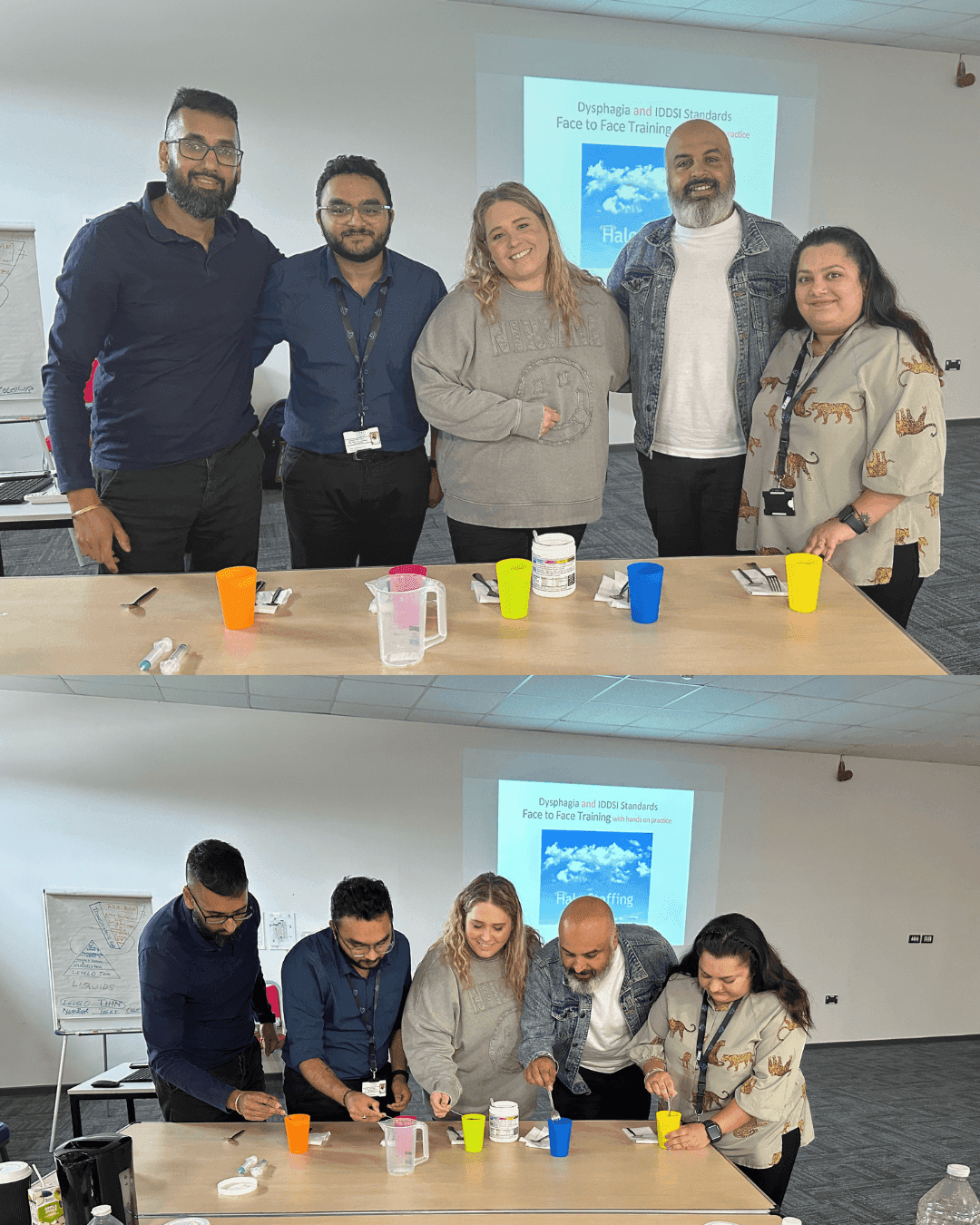
This week, our Training and Recruitment Team, together with our Senior Care Coordinators, attended Dysphagia and IDDSI training at Staffordshire Beaconside Centre, delivered by Staffordshire Council. The session was detailed, practical, and hands on. Most importantly, it strengthens how we keep mealtimes safe, calm, and enjoyable for people who live with swallowing difficulties.
Key takeaway: Better knowledge leads to safer food textures, clearer routines, and fewer risks at home. Your loved one’s safety, dignity, and independence stay at the centre.
If you are new to home support, start with our Home Care Guide for the basics of assessment, planning, and safeguarding.
What Is Dysphagia And Why It Matters
Dysphagia means difficulty swallowing. It is common after a stroke, with dementia, Parkinson’s, learning disabilities, or general frailty. People may cough when drinking, avoid certain textures, tire during meals, or lose weight because eating becomes hard work. Without the right support, dysphagia can lead to choking, chest infections, dehydration, and malnutrition.
Early recognition and a calm, structured approach help people eat and drink safely. That is where IDDSI provides a shared framework.
A Quick Overview Of IDDSI
IDDSI stands for the International Dysphagia Diet Standardisation Initiative. It gives everyone involved a common language for food and fluid textures so plans are clear across home care, hospitals, and speech and language therapy.
Typical levels include:
- Food: Level 4 Pureed, Level 5 Minced and Moist, Level 6 Soft and Bite Sized, Level 7 Regular easy to chew
- Drinks: Level 0 Thin through to Level 4 Extremely Thick
Using consistent levels keeps meals safe and removes guesswork for families and carers.
What Our Team Practised On The Day
- Spotting warning signs that need a referral to Speech and Language Therapy
- Preparing IDDSI textures correctly with everyday kitchen tools
- Checking fluid thickness using simple tests so drinks match the recommended level
- Adapting favourite recipes without losing flavour or dignity
- Positioning, pacing, and mouth care that make mealtimes safer and more comfortable
- Recording what was served and how it went, so care plans stay accurate and useful
How This Improves Care Plans At Home
Following the training, we are updating care plans to include:
- Clear IDDSI levels for food and drinks, written in plain English
- Preferred recipes and how the person likes meals presented
- Safe positions for eating and drinking, with rest breaks where needed
- Medication guidance that avoids tablets which are hard to swallow. Read Home Care Medication Management for safe routines
- Red flags and when to contact the GP or NHS 111
If mealtimes are more difficult late in the evening, Overnight Home Care can provide reassurance, hydration prompts, and gentle support. After a hospital stay, our Home Care After Hospital Discharge checklist helps families set up the first week at home safely.
Tips For Safer, Calmer Mealtimes
- Sit fully upright, feet supported, chin slightly down
- Offer small spoonfuls and take unhurried pauses
- Use thickened fluids if recommended and check consistency regularly
- Keep favourite flavours on the menu by modifying textures rather than removing foods
- Finish with gentle mouth care to reduce infection risk
- Keep the environment quiet and unhurried, remove distractions where possible
When To Seek Professional Advice
Contact your GP or NHS 111 if you notice any of the following:
- Regular coughing or choking during meals
- A wet or gurgly voice after drinking
- Unexplained weight loss or signs of dehydration
- Recurrent chest infections
- Anxiety or distress linked to eating and drinking
Do not delay if symptoms worsen. Early advice prevents complications and keeps confidence high.
Person Centred, Every Step Of The Way
Being person centred is not a slogan, it is our commitment. We match support to preferences, culture, and routines, and we involve family in planning so everyone understands what safe mealtimes look like. That is how we uphold Trust, Professionalism, and Compassion in daily practice.
How Caring Care Can Help
- Assessment visits that include food, drink, and medication safety
- Care plans with IDDSI levels and clear, practical instructions
- Carers trained to prepare the right textures and to recognise when to escalate concerns
- Flexible visits around breakfast, lunch, tea, or late evening support
- Liaison with Speech and Language Therapy, dietitians, and GPs
To talk about safer mealtimes for your family, call 0330 056 3111 or reach us through Contact. You can also explore our Services and the Caring Care Knowledge Hub for more practical guidance.
Further Reading
BLOGS
Our Latest Blogs
Sometimes It's the Smallest Gestures That Make the Biggest Difference
The biggest moments in home care are not the big moments. A reflection on the small gestures that quietly turn a visit into proper care — and what we look for when we hire.

Behind Every Care Visit: Meet the Team Making Caring Care Run
A look at the carers, office team, supervisors, trainers and managers behind every Caring Care visit — and an invitation to families and would-be carers in the West Midlands.

Donating Easter Eggs to Well Wishers, the Charity Behind Walsall NHS Trust
This Easter, Caring Care donated Easter eggs to Well Wishers, the official charity of Walsall NHS Trust — and a quick look at why we keep showing up for our local community.