Supporting a Loved One with Diabetes at Home: A Practical Guide for Families
Diabetes is one of the most common long-term conditions in the UK, and for many older adults it sits quietly in the background of daily life — until something tips it out of balance. A missed meal, a forgotten dose, a long stretch in the heat, an infection. World Diabetes Day is a moment to pause and think about the everyday support that helps people live well with diabetes, especially those of us caring for parents and grandparents in their own homes.
At Caring Care, diabetes support is woven into many of the home care packages we deliver across Wolverhampton, Walsall and the wider West Midlands. It is rarely the headline of a care plan, but it shapes a surprising amount of what a carer notices on a visit. This guide pulls together what we have learned, and what families most often ask us about.
Why diabetes care matters more as we get older
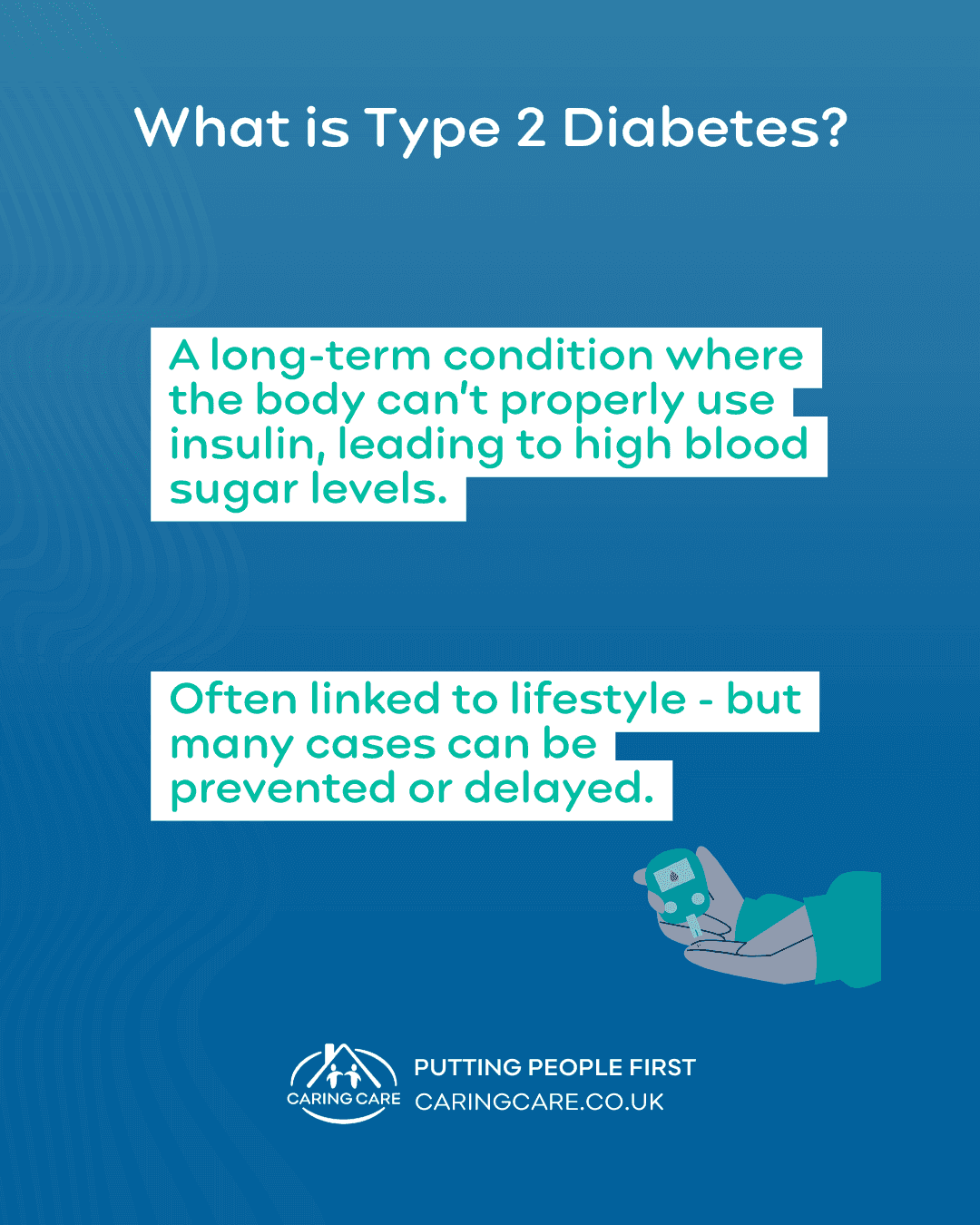
Diabetes affects how the body manages blood sugar. For older adults, the balance is often more delicate. Appetite changes, slower metabolism, multiple medications, mobility limitations and gradual changes in eyesight or memory can all make day-to-day diabetes management harder than it used to be.
The risks of an unmanaged blood sugar level are not abstract. Hypos (low blood sugar) can cause confusion and falls. Sustained high blood sugar can damage the heart, kidneys, eyes and nerves over time. Even small dips in routine — a difficult night's sleep, a stomach bug, a change of medication — can shift things enough to matter.
The good news is that the things that help most are usually quite simple. Consistent meals, regular monitoring, taking medication on time, gentle movement, hydration, and noticing change early. That is exactly the kind of support a good home care service is built to provide.
What good diabetes support at home looks like
Home care is not the same as clinical care. We do not prescribe medication or change a diabetes treatment plan. What we do is make sure the plan that has been agreed with the GP or diabetes nurse is actually followed, day after day, in a way that feels normal and unhurried.
In practice, that includes a handful of quiet routines that quickly become second nature:
- Medication prompts and observation. Carers can remind a person to take their medication on time, observe whether it has been taken, and report concerns to the family or GP. For people taking insulin, we follow the agreed administration arrangements set out in the care plan.
- Meal support. Regular meals at roughly consistent times make a real difference to blood sugar stability. Carers can prepare meals, encourage hydration, and gently steer towards options the household has agreed are sensible.
- Foot and skin checks. Diabetes can change sensation in the feet, and small cuts or sores can become bigger problems. A carer who knows the person well will notice changes early.
- Movement and routine. Where mobility allows, supporting a short walk or seated exercises can help with circulation, mood and blood sugar.
- Reporting changes. A subtle shift in confusion levels, sudden thirst, repeated trips to the bathroom or low energy can all be early signs that something is off. A regular carer is often the first person to spot it.
None of these tasks look dramatic on their own. The value is in their consistency. The same carer, the same time, the same gentle attention, week after week.
The questions families ask us most
When families first contact us about diabetes support, three questions come up again and again.
"Can the carer give insulin?" Yes, where this is part of the care plan and the carer has been trained for it. We will always be clear about what is and isn't possible at the assessment stage, and we work closely with the diabetes nurse or GP to make sure everything is documented properly.
"What if my mum forgets she's already taken her medication?" A consistent visit schedule and a medication administration record (MAR sheet) help. Where memory is becoming an issue, we can introduce simple visual prompts and ensure visits land at the right times. We will also flag any concerns to the family.
"How quickly can we get support in place?" This depends on the level of care needed, but for most people we can complete an initial assessment within a few days and start a care package shortly after. Urgent situations are handled separately.
When home care is the right answer
There is no single moment at which home care becomes the right step. Often it is a series of small worries — a near-miss with medication, a missed meal, a fall on the way to the kitchen — that prompts a conversation. The question we encourage families to ask is not "is this an emergency?" but "what would feel reassuring?"
A short call in the morning to make sure breakfast is eaten and medication taken. A lunchtime visit to check in and prepare a meal. An evening visit for tea, a chat and a tidy. Care can be as light or as comprehensive as your family needs, and it can flex as things change.
For families already managing diabetes themselves while juggling work and other responsibilities, a regular carer often becomes a quiet partner — someone who knows the routine, notices the small things, and lets the family rest knowing it is being taken care of.
How Caring Care supports diabetes at home
Across Wolverhampton, Walsall and the surrounding areas, our team supports people living with type 1 and type 2 diabetes in their own homes. Every package starts with a face-to-face assessment, an honest conversation about what is working and what is not, and a care plan written around the person — not around our convenience.
Our carers are trained to recognise the early signs of hypoglycaemia and hyperglycaemia, to support safe medication management, and to communicate concerns quickly to the right people. We believe that home is the best place for most people to live well with diabetes, with the right support around them.
If you are caring for a loved one with diabetes and would like to explore what support could look like, we are always happy to have a no-pressure conversation. You can read our full guide on supporting diabetes at home in our Knowledge Hub, or contact us directly using the details below.
Caring Care | Trust. Professionalism. Compassion. Visit caringcare.co.uk · Email info@caringcare.co.uk · Call 0330 056 3111
BLOGS
Our Latest Blogs

Sometimes It's the Smallest Gestures That Make the Biggest Difference
The biggest moments in home care are not the big moments. A reflection on the small gestures that quietly turn a visit into proper care — and what we look for when we hire.

Behind Every Care Visit: Meet the Team Making Caring Care Run
A look at the carers, office team, supervisors, trainers and managers behind every Caring Care visit — and an invitation to families and would-be carers in the West Midlands.

Donating Easter Eggs to Well Wishers, the Charity Behind Walsall NHS Trust
This Easter, Caring Care donated Easter eggs to Well Wishers, the official charity of Walsall NHS Trust — and a quick look at why we keep showing up for our local community.