News

Cost of Home Care in Walsall: A 2026 Pricing Guide
Most families come to home care with the same first question. How much?
It depends. On how many hours of support you need. On whether you want a carer to pop in three or four times a day, or one who lives in. On whether you can pay privately, or whether Walsall Council or the NHS will help.
This is a real-numbers guide. Walsall figures from 2026, the funding routes worth knowing about, and the questions to ask any provider before signing on. No marketing fluff.
What you're likely to pay
Here are typical 2026 figures for our patch of the West Midlands. Walsall sits a touch below central Birmingham, and well below London.
A few things shift the figure on the invoice. Visit length, for a start. Most providers have a minimum visit of 30 or 45 minutes, because a 15-minute call doesn't cover the carer's travel time. Evenings, weekends and bank holidays usually come with a premium. A Christmas Day visit costs more than a Tuesday afternoon.
Carer training matters too. A dementia-trained carer, or someone experienced with PEG-feeding, or a senior carer leading a complex package, costs more than a general carer doing companionship. Some clients need two carers for moving and handling. That's a "double-up", and it roughly doubles the cost.
When you compare quotes, make sure you're comparing the same care plan. Not just the headline hourly rate.
When live-in starts to make sense
A useful rule of thumb. Visiting care is cheaper than live-in care until you're looking at about eight to ten hours a day of visits. Above that, the maths flips.
If someone needs less than four hours a day, visiting care wins on cost almost every time. If they need someone in the house at night, with eyes on them often, live-in or a 24-hour rotating team usually beats stitching together long visits.
There's a quality argument too, not just a cost one. Live-in care gives you the same carer day in, day out. Continuity matters enormously for people with dementia, or people approaching end of life. Visiting care gives you flexibility. You pay for the hours you use, and you can scale up or down without much fuss.
For the bigger picture (home care vs residential), see our home care vs care home guide.
Funding it
Four main routes. Most families end up using more than one.
Self-funding
Above £23,250 in savings or assets and Walsall Council will normally expect you to pay for your own care. That's the current upper capital limit for England, regardless of income. Most of our private clients in Walsall self-fund for the first year or two at least.
The upside? Full control. You pick the provider, set the schedule, change provider at short notice. The downside is the bill lands on the family or on savings.
Walsall Council funded care
Savings under £23,250 and you may be eligible for partial or full Walsall Council funding, after a Care Act needs assessment.
The council will work out what care needs the person has. That's a free assessment, set out in the Care Act 2014.
Then they'll run a financial assessment to see what, if anything, the person should contribute. Either they commission care directly through approved providers, or they pay a personal budget that the family can spend with a CQC-rated provider of their choice. That's often a Direct Payment.
Start by calling Walsall Council's Adult Social Care team. Expect four to eight weeks from first call to care plan, sometimes faster if urgent.
NHS Continuing Healthcare
If the person's primary need is health rather than social care, they may qualify for NHS Continuing Healthcare. Think advanced Parkinson's, motor neurone disease, or end-of-life needs. Fully NHS-funded, no means test.
CHC is hard to qualify for. The assessment process is long. But it's worth applying if there's a clinical case. Your GP or hospital discharge social worker can refer for a Checklist assessment. If that's positive, a multidisciplinary team carries out a Decision Support Tool assessment.
Even if you don't qualify for full CHC, you might be eligible for Funded Nursing Care (FNC), which covers just the nursing element.
Attendance Allowance and PIP
Two non-means-tested benefits. They don't cover care directly but give a weekly cash sum towards it.
Attendance Allowance, for people over State Pension age. The 2026 rates are £73.90 or £110.40 a week, depending on level.
Personal Independence Payment, for people under State Pension age.
Both worth applying for if there's a care need. They aren't affected by savings or income, and the money can be spent however the person chooses. Age UK's benefits helpline will walk you through the application. Their success rate on supported applications is high.
Questions to ask any provider in Walsall
A handful of questions tell you most of what you need to know.
- What's your CQC rating? Walsall providers should be inspected by the Care Quality Commission. Good or Outstanding overall is what you're looking for. Ask for the most recent report. Our CQC-rated home care guide covers this properly.
- What's the all-in hourly rate, and what isn't included? Get travel, mileage, evening and weekend premiums, double-ups and last-minute changes in writing.
- What's the notice period to cancel or change visits? Twenty-four hours is standard for short notice. Longer for ending the contract.
- Will I have the same carer or carers, consistently? Continuity matters hugely. Ask how the rota works and what happens when a regular carer is off.
- What if needs change? Most plans need tweaking within a few months. How quickly can you scale up or adjust?
- What's the complaints process? A well-run provider can answer this in two sentences.
Where to start
Three practical first steps if you're at the start of this.
First, write down the tasks the person needs help with, and roughly how often. Don't try to get it perfect. A provider's first assessment will refine it. Our home care checklist walks families through this.
Second, call Walsall Council's Adult Social Care team for a Care Act needs assessment. Even if you think you'll self-fund. The assessment is free, and the council can flag funding options you may not know exist.
Third, get two or three written quotes from CQC-rated providers in Walsall. Compare the same care plan. Look at the all-in price, not the headline hourly. Our guide to choosing a provider has the right questions.
Useful external resources
- Care Quality Commission for inspection reports
- Age UK Advice Line for free benefits and care advice
- Carers UK for family-carer support
- Walsall Council Adult Social Care for assessments and funding
- NHS Continuing Healthcare guide for eligibility and how to apply
- GOV.UK Attendance Allowance for application forms and rates
Most well-run providers will give you a four-week trial. You're not signing up for life on day one.
Caring Care offers visiting, live-in, 24-hour and respite care across Walsall and the wider West Midlands. We're CQC-rated and have been supporting Walsall families since 2018. For an honest conversation about what care might cost in your situation, including funding, call us on 0330 056 3111 or visit our Walsall home care page and ask for a free care assessment.
News
Our Latest News
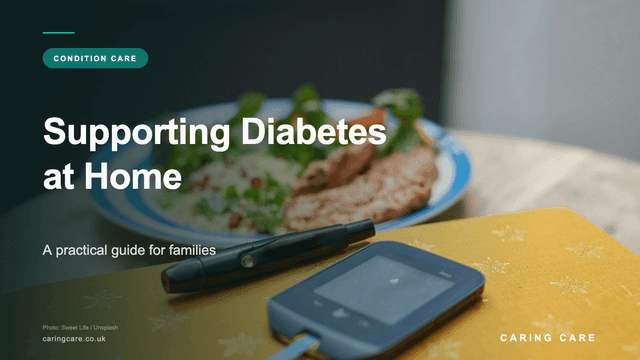
A practical guide for families caring for an older relative with diabetes at home — what good support looks like, the questions we get asked most, and when to bring in a little extra help.
What CQC ratings actually mean for home care in the West Midlands — and the questions families should ask before choosing a provider in Walsall, Birmingham, Wolverhampton, Dudley, Sandwell or Staffordshire.