News
How to Spot a Good vs Bad Care Agency
Care agencies vary a lot. Some provide excellent care that transforms a family's life. Others get by on volume and leave families fighting to be heard. A lot of them sit somewhere in between.
The difference usually isn't obvious from a glossy website. It shows up in the small things: who answers the phone, how the first visit runs, how fast concerns get resolved. This guide covers what to watch for on both ends of the scale across the West Midlands, from the first call through to the first few months of care.
The short answer
Good care agencies share recognisable traits: CQC-rated Good or Outstanding, directly employed carers, small area teams for continuity, quick response to concerns, clear care plans that get reviewed, and honest answers to hard questions. Bad agencies tend to be the opposite: hard to reach, high carer turnover, rushed or missed visits, generic care plans, and defensiveness when things go wrong.
The clearest signal is often the first phone call. Good agencies listen first. Bad ones pitch first.
Green flags on the first call
Six things worth noticing when you first call a care agency:
- They ask about the person before they talk about themselves
- They give specific answers (not "we handle all that") when you ask about scheduling, carer continuity, or escalation
- They offer a free care assessment visit and don't pressure you to sign anything first
- They have a named care manager or senior you can speak to, not just a receptionist
- They tell you honestly what they can and can't cover (coverage area, specialisms, capacity)
- They don't push for a quick decision
If the call feels like a sales call, that's information. The best care agencies behave more like good doctors: patient, thorough, honest about limits.
Red flags on the first call
Six things that should make you pause:
- They won't give specifics ("don't worry about that, we handle everything")
- They can't tell you how many different carers you'll see in a month
- They want to send a contract before an assessment visit
- No one can tell you their CQC rating or when they were last inspected
- They talk about their business ("we're growing fast", "we're taking on new clients") more than about care
- They offer a price before they've met the person
A provider should know the person's needs before they talk about cost. Any provider that names a figure on the first call hasn't done the thinking.
Check the CQC rating
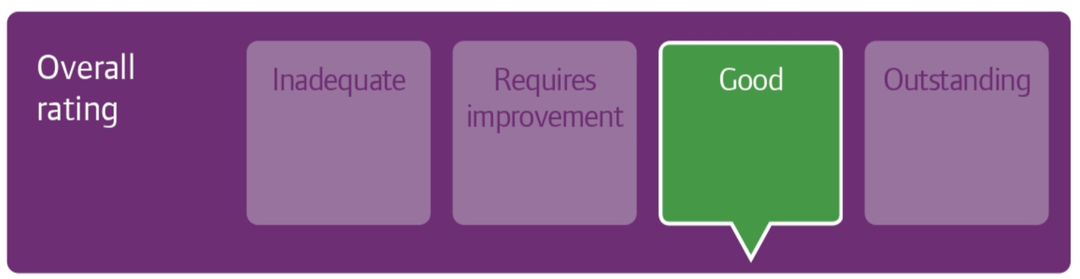
The Care Quality Commission regulates all registered home care providers in England. Every provider has a public CQC rating of Outstanding, Good, Requires Improvement, or Inadequate.
Find it on the CQC website. Search by provider name. Look at:
- Overall rating (Good or Outstanding is the baseline for a quality provider)
- Date of the last inspection (ratings older than 2 years are less meaningful)
- The five domain ratings (Safe, Effective, Caring, Responsive, Well-led)
- Any enforcement actions or compliance notices
A Requires Improvement rating isn't automatic disqualification. Some providers are turning things around. But ask what's changed since the inspection and what the action plan was. Vague answers mean nothing has changed.
The CQC report tells you a lot
The written CQC report is more useful than the headline rating. The report tells you:
- What the inspectors actually saw
- What family members said in anonymous feedback
- What the staff said about culture and training
- What safeguarding concerns, if any, existed
A good report mentions specific positive practices and quotes from families. A worrying report mentions missed visits, medication errors, high staff turnover, or late responses to concerns.
Read the whole report before signing on, not just the rating.
Direct employment vs agency staff
Some care providers directly employ their carers. Others operate as agencies that supply self-employed carers. The difference matters enormously for care quality.
Directly employed carers tend to deliver more consistent care because:
- They're paid for travel time between visits (not just the visits themselves)
- They have proper employment rights (sick pay, holiday pay, pension)
- They're incentivised to stay long-term with one provider
- They get consistent training, supervision and feedback
- They work in area teams, which supports continuity
Agency carers often work for multiple agencies simultaneously, aren't paid for travel, and move on quickly. The care can still be fine, but consistency is harder.
Ask the provider directly: "Are your carers directly employed, or self-employed through an agency arrangement?" The answer tells you a lot.
Continuity of carer
The single biggest predictor of satisfaction with home care is seeing the same one or two carers consistently.
Good providers:
- Assign a small team of 2 to 3 regular carers per client
- Rotate predictably (which carer does mornings vs evenings)
- Give notice when holidays or sickness mean a new face
- Introduce new carers through a shared visit with the regular carer first
Bad providers:
- Send whoever's available
- Give the client no idea who's coming each visit
- Rotate carers constantly, so no one knows the person well
- Have high staff turnover, so familiar carers keep leaving
If you ask on day one how many different carers will visit in a typical month, a good provider says "two or three". A bad one hedges, says "it varies", or quotes a number in double digits.
Care plan quality
The care plan is the written document that tells the carer what to do, how, and when. Good care plans are specific. Bad ones are generic.
A good care plan includes:
- The person's own words about what matters to them
- Specific preferences (how they like their tea, which side of the bed they get up from, favourite TV programme)
- Clear task breakdown with timings
- Clear medication schedule with MARs (Medication Administration Records)
- Risk assessments (falls, pressure areas, choking, mental capacity)
- Emergency contacts and escalation routes
- Review date
A bad care plan is three pages of generic text that could apply to anyone.
Ask to see a sample care plan on the first visit. Any provider that won't show you a sample is a flag.
How they handle concerns
Every care package has issues at some point. Missed visits, miscommunications, personality clashes, medication errors. What matters is how fast they get sorted.
Good providers:
- Have a named care manager you can reach direct
- Return calls within a few hours in working time, same day for urgent
- Investigate concerns thoroughly and report back
- Welcome early feedback rather than treating it as a complaint
- Follow safeguarding protocols transparently when needed
Bad providers:
- Make you call a central office that doesn't know your case
- Say "we'll look into it" and never follow up
- Get defensive when you raise concerns
- Blame individual carers rather than their own systems
- Only respond when a complaint is escalated
The way a provider handles the first small issue tells you how they'll handle the big one later.
Price isn't the whole picture
Cheaper doesn't mean worse. More expensive doesn't mean better. What matters is value: for the money you pay, what do you get?
Good providers justify their price with:
- Properly paid, directly employed carers (not agency rates)
- Continuity of carer
- Thorough training programmes
- Responsive management
- Named care manager with direct contact
These are the things to ask about on every call, whoever you speak to.
Every family gets a written quote after a free care assessment. Our own view is that cost conversations should happen after the assessment, not before. The real cost depends on hours, times, complexity and specialist training. Our cost of home care in Wolverhampton and cost of home care in Walsall guides explain the drivers.
For independent guidance on arranging care, Which?'s home care guide and Age UK are the external references we'd point families to.
Local reputation matters
Online reviews help, but local word of mouth often tells you more. Worth asking:
- The GP practice (they often know which local providers are reliable)
- The district nurse team
- Local Age UK branch
- Carers UK branch (if a family carer is involved)
- Local council social work team
- Other families using home care in the area
A provider with glowing website testimonials but a poor local reputation is a flag. One with modest online presence but strong word-of-mouth is often a quiet win.
Trial periods matter
Most good providers offer a short trial period (a week or two) before locking anyone into a long-term commitment. Use it. In the trial:
- Watch for punctuality
- See if the carer builds rapport with the person
- Check that care plan tasks are actually being done
- Note how the provider responds to any issues
- Ask the person being cared for how it felt
If the trial doesn't convince you, change providers before locking in. Switching costs are much higher after month one than they are in the first fortnight.
How Caring Care measures up
We're not the right fit for every family. But here's what we try to do consistently:
- CQC-rated Good, directly employed carers, small area teams for continuity
- Named care manager with direct contact, not just a central office
- Written care plans that get reviewed every 3 months
- First visit always done by a senior carer or care manager, with no pressure to sign
- Honest conversation about what we can and can't cover
- No pricing until we've done the free assessment
See our first visit from a home carer guide for what a well-run first visit looks like, or what does a home carer actually do for a breakdown of the day-to-day.
Our head office is in Walsall, with a second office in Wolverhampton, and we've been running since 2008. For a care conversation, call us on 0330 056 3111 or visit our domiciliary care page.
Frequently asked questions
Should I use an agency or a direct carer? A regulated agency (CQC-registered) gives you insurance, training oversight, cover for sickness and holidays, safeguarding processes, and a named care manager. A direct carer (hired privately as an employee) can be cheaper but you take on all the HR, insurance, training, and cover arrangements yourself. For most families, a regulated agency is simpler.
How do I check a care agency's CQC rating? Search the provider name at cqc.org.uk. You'll see the overall rating, the five domain ratings, the last inspection date, and the written report.
How many different carers is too many? For regular visiting care, more than 4 to 5 different carers in a month suggests continuity issues. For live-in care, two regular live-in carers rotating is normal. More than that is usually a staffing problem.
What if we've already signed with an agency and it's not working? Check your contract for the notice period (usually 1 to 4 weeks). Give notice in writing. Start interviewing new providers before the notice period ends, so there's no gap in care. Any good provider can take over mid-notice if you want continuity.
Can I complain to the CQC about a provider? Yes. The CQC's online form at cqc.org.uk/share-your-experience-finder accepts concerns from families, service users and the public. The CQC uses this to decide where to inspect.
Useful external resources
News
Our Latest News
NHS Continuing Healthcare explained: the CHC checklist, which needs qualify, Fast Track, care at home, reviews and appeals in the West Midlands.
Practical dementia routines: morning, mealtimes, afternoon, sundowning, bedtime, communication and personal care. What works, what to avoid, and when to ask for help.

GET IN TOUCH
Caring Care
Units 4 & 5, Hatherton Court,22 Hatherton Street, Walsall, WS4 2LA
Tel: 0330 056 3111
Email: info@caringcare.co.uk


Copyright ©️ 2024 Caring Care LTD. All Rights Reserved.